

What Does a Software Engineer Do?


Understanding the numbers
When reviewing job growth and salary information, it’s important to remember that actual numbers can vary due to many different factors—like years of experience in the role, industry of employment, geographic location, worker skill and economic conditions. Cited projections are based on Bureau of Labor Statistics data, not on SNHU graduate outcomes, and do not guarantee actual salary or job growth.
From mobile banking apps and online booking systems to remote work platforms, the tools of today’s technology-driven world would not be possible without software engineering.
As technology advances and becomes more ingrained in everyday life, the work of software engineers continues to evolve. If you’re interested in a fast-paced tech career, get started by understanding what a software engineer does and exploring career opportunities in the field.
What is Software Engineering?

Software engineering is a type of software development, according to the U.S. Bureau of Labor Statistics (). It's a broad field that plays a role in virtually every industry today, from healthcare and financial services to manufacturing, education and government.
“A software engineer designs and implements software on different platforms in different (coding) languages,” said Olga Mill, a software engineer and adjunct faculty at Õ¬ÄÐƵµÀ (SNHU). “Sometimes we troubleshoot existing software or write new software.”
Software engineers may also direct the work of software developers, quality assurance analysts and testers, BLS said.
Do Software Engineers Only Code?
While software engineering is often compared to computer science and programming, it’s actually a much broader career path, said Mill. Software engineers and programmers both play a role in developing software, but their scope of work is very different.
While programmers may be responsible for writing specific code or creating a certain functionality within a piece of software, software engineers look at the big picture, said Mill. Software engineers help ensure a piece of software not only works but that it functions in a way that aligns with industry needs, compliance standards and the needs of end-users.
“You really need to know your industry and know the latest software development practices,� Mill said.
Read more: 5 Computer Science Languages to Learn
How is AI Changing Software Engineering?

Artificial Intelligence (AI) is changing many roles, according to Dr. George Siemens, chief AI officer at SNHU, and software engineering is no exception. "Software engineering is one domain of work that has seen substantial impact," he said.
While he noted that it's too early to predict the long-term impact on jobs, Siemens said fewer entry-level software engineers and developers are being hired. "For many developers, however, productivity is increasing and the nature of that work is changing," he said.
Some tasks have transferred to AI systems like Claude Code, Siemens said, causing oversight and other actions involving human judgment to increase in importance.
Amidst this evolving landscape, BLS projects that jobs for software developers will grow by 2034, which is significantly faster than the average 3% growth rate for all occupations.* This is largely because software engineers and developers will be needed to continue advancing AI and robotics, BLS reports.* So, if you're just starting in software engineering, you might want to consider getting into AI.
Learn more: Exploring Careers in Artificial Intelligence and AI-adjacent Careers
What Do Software Engineers Actually Do?
The daily responsibilities of a software engineer will vary depending on the industry you’re working in and your specific role.
Mill said that the role is constantly changing, thanks to regulatory and technology shifts across many industries, as well as the evolution of software development tools like AI and cloud-based systems. If you’re interested in becoming a software engineer, Mill said, be ready for a career-long learning experience.
“Don’t be afraid to learn new things,” she said. “Adopting new technologies and being open-minded is a requirement.”
Despite these many shifts, there are some common duties for which many software engineers are responsible on a regular basis. According to Mill, these include:
- Designing new software and updating existing software
- Documenting the design and functionality of existing software for future reference
- Investigating, identifying and fixing software problems
- Ensuring the security of programs and development environments
- Writing reports to communicate software updates, requirements or performance with all stakeholders

Where Do Software Engineers Work?
Just about every industry and company today relies on software for some aspect of their day-to-day work. Mill said software engineers can find work in fields including:

- Aerospace, aviation and manufacturing
- Banking and financial institutions
- Cybersecurity, data analysis and software development
- Healthcare and insurance
- Hospitality and marketing
According to BLS, software developers, including software engineers, were employed in 2024. The industries that employed the most software development workers were:
- Computer systems design and related services (30%)
- Finance and insurance (10%)
- Software publishers (9%)
- Manufacturing (8%)
- Management of companies and enterprises (5%)
Many software engineers across many industries also work from home. While there's no guarantee that you'll find a remote role, research from the software development company ScienceSoft said that of software engineers will work fully or partially from home by the end of 2026.
How Much Do Software Engineers Get Paid?
That depends on how you define a lot. Workers in the software engineering field have a lot of earning potential. Software developers earned a median annual wage of in 2024, according to BLS data.*
Depending on where you work, your earning potential could be even higher. According to BLS, software developers working in software publishing earned $149,990 in 2024.* The highest-paid 10% of software developers earned more than $211,450 the same year, BLS said.*
Find Your Program
How to Become a Software Engineer
The journey to becoming a software engineer typically starts with education. While some engineers who have been working in the field for a long time may be self-taught or only have a software development certificate, Mill said most companies today are looking for workers with a four-year degree or higher.

That's why Ulugbek Miniyarov '21 decided to earn his Bachelor of Science (BS) in Computer Science with a concentration in Software Engineering from SNHU. Miniyarov took a few programming courses after high school and started his career, but he said he always wanted to get his bachelor's.
"I worked in various technology companies for over a decade in engineering and leading roles," he said. "However, I always wanted to have an educational history so that I could continue my academic career in the near future."
After graduating, he said his degree was well worth it.
"I would recommend the program to others who are looking for a computer science program that not only teaches you but also builds your network with high-skilled people in the field," Miniyarov said.
Read more: How to Get Into Tech: Insider Advice From Industry Professionals
How Long Does It Take to Become a Software Engineer?
According to BLS, most software developers need a bachelor's degree to . So you could get started in the field in just a few years.
Earning a bachelor’s degree in computer science with a concentration in software engineering can give you the knowledge and hands-on learning experience you need to succeed in the field. In a degree program, you’ll learn the principles of designing software on time, on budget and within certain specifications, exploring a variety of key topics, including:
- Approaches to reverse engineering code
- Emerging trends in systems architecture
- Secure coding techniques
- User interface/user experience (UI/UX) design and development techniques
Many software engineering degree programs will also include opportunities to solve real-world problems through hands-on software design and development and internships, letting you build a portfolio of your experience that can help you land a job.

The Most Important Tech Skills Kitrick Gained From His Degree
Kitrick is a front-end web designer with a master’s in IT with a concentration in software application development. He shared the most important skills he learned during his program.

The 1 Thing That Made Nick's Computer Science Degree Stand Out
When Nick started his computer science degree, he didn't have any programming experience. Experiential learning through project classes was a game-changer for him.
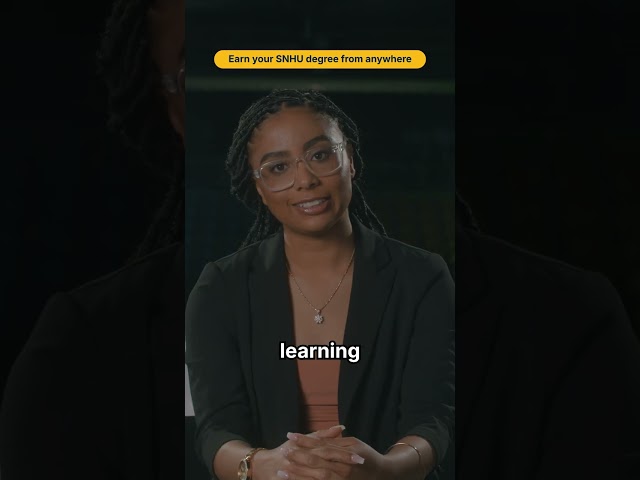
Interested in a Computer Science Degree? Ashley Talks About the Benefits
Ashley chose to earn a bachelor's in computer science because it aligned with her role in the military. Here is what she said about her experience at SNHU as she prepared to graduate.
Does Software Engineering Require Math?
A software engineering education, like a bachelor's in computer science with a concentration in software engineering, will absolutely include math courses as part of the requirements. Mathematics courses may include applied linear algebra, discrete mathematics and mathematics for computing. But Mill said that while math is part of the preparation for software engineering, most jobs don’t require advanced math work.
In fact, Mill said that equating the field with math is one of the most common misconceptions about software engineering. Instead, she said the logical thinking and problem-solving strategies gained in a bachelor’s degree program are often even more important than math skills.
Is It Hard to Be a Software Engineer?
Mill said that no matter where you are in your career, this can be a challenging field. The role requires strong knowledge of coding languages and a solid understanding of the industry you work in, and it can take a long time to feel comfortable in a new job, Mill said. With rapid changes coming to the tech world all the time, there’s always something new to learn or software to update.
“People don’t realize how fast-paced this field is,” Mill said. “Every time we get a job, we have to learn a lot.”
Still, Mill said that while all of these changes can make the field stressful, they can also make it highly rewarding.
Advancing in Software Engineering

If you want to advance your career, take on leadership or teaching roles or focus on a specific area of software engineering, earning a master’s in IT with a concentration in software application development could give you a leg up. Or, if you plan to start a career in AI software engineering, in particular, SNHU offers a master's in computer science with a concentration in artificial intelligence.
A master’s degree will not only dive deeper into software design and development techniques; it can also help you build key soft skills that Mill said are needed for moving up in your software engineering career, such as collaboration, communication and critical thinking.
While specific job titles can vary among companies, Mill said the hierarchy of software engineer positions is pretty standard across the industry. Entry-level positions are typically classified as Software Engineer I. As you gain more experience, take on bigger projects and expand your education, it’s possible to move up to positions including (in order):
- Software Engineer II
- Software Engineer III
- Staff Software Engineer
- Senior Software Engineer
- Principal Software Engineer
The more advanced software engineer positions typically require more strategic thinking and collaboration with other departments and may include mentoring of newer workers, Mill said. “As you move up, you could get more responsibilities,” she said. “It could also mean you’re working on more complicated and bigger projects."
Eventually, Mill said, you may also take on leadership roles and manage a team of other engineers.
Is Software Engineering a Good Career?
If you’re looking for a fast-paced, challenging path with lots of opportunities to learn new things, it could be right for you. Mill said the best thing you can do to get started is focus on building relationships and commit to being a lifelong learner.
“Stay open-minded and maintain your professional connections,” she said. “Continue learning and be enthusiastic about new technology.”
Discover more about SNHU's bachelor's in computer science with a concentration in software engineering. Find out what courses you'll take, skills you'll learn and how to request information about the program.
*Cited job growth projections may not reflect local and/or short-term economic or job conditions and do not guarantee actual job growth. Actual salaries and/or earning potential may be the result of a combination of factors including, but not limited to: years of experience, industry of employment, geographic location, and worker skill.
Danielle Gagnon is a freelance writer focused on higher education. She started her career working as an education reporter for a daily newspaper in New Hampshire, where she reported on local schools and education policy. Gagnon served as the communications manager for a private school in Boston, MA before later starting her freelance writing career. Today, she continues to share her passion for education as a writer for Õ¬ÄÐƵµÀ. Connect with her on .
Explore more content like this article

Academic Spotlight: Joseph Whitworth, Game Development Adjunct Professor

Types of STEM Degrees and Majors to Consider

Telling Stories With Numbers: How to Become a Data Analyst
About Õ¬ÄÐƵµÀ

SNHU is a nonprofit, accredited university with a mission to make high-quality education more accessible and affordable for everyone.
Founded in 1932, and online since 1995, we’ve helped countless students reach their goals with flexible, career-focused programs. Our 300-acre campus in Manchester, NH is home to over 3,000 students, and we serve over 135,000 students online. Visit our about SNHU page to learn more about our mission, accreditations, leadership team, national recognitions and awards.